


Two things define the visual identity of professional bartending: the glass the drink is served in, and the technique used to make it. Get either wrong and you undermine the drink before the customer even tastes it. Get both right and you are operating at the level of the world’s best bars.
This guide covers the complete cocktail glass guide which includes every type, what it is used for, and why. It also introduces flair bartending: what it is, why it matters, and how to get trained at Nepal’s leading cocktail and flair academy.
Complete Cocktail Glass Guide: Every Type Explained
Glassware is not decoration. The shape, volume, and material of a cocktail glass directly affect aroma concentration, temperature retention, visual presentation, and the drinker’s experience. Every glass in a professional bar exists for a reason.
1. Martini Glass (Cocktail Glass)
Shape: Inverted cone on a long stem | Volume: 120–300ml
Purpose: The wide, open bowl concentrates aroma at the rim which is essential for spirit-forward, stirred cocktails where nose is a major part of the experience. The stem prevents hand-warming.
Classic drinks: Dry Martini, Cosmopolitan, Manhattan (served up), Aviation, Gimlet.
Professional note: Always chill before use — pour ice water in, swirl, discard. A warm martini glass ruins a cold cocktail within 90 seconds.
2. Coupe Glass
Shape: Shallow, broad bowl on a long stem | Volume: 150–240ml
Purpose: The modern alternative to the martini glass for stirred and shaken cocktails. The rounded bowl is more stable, the wide rim distributes aroma well, and it is harder to spill. Currently the preferred professional choice for most ‘up’ drinks.
Classic drinks: Daiquiri, Sidecar, Clover Club, Last Word, Pisco Sour.
3. Highball Glass
Shape: Tall, straight-sided cylinder | Volume: 240–350ml
Purpose: The most versatile glass in any bar programme. Designed for long drinks with a high mixer-to-spirit ratio. The tall shape maintains carbonation and accommodates substantial ice.
Classic drinks: Gin & Tonic, Mojito, Tom Collins, Whisky & Soda, Virgin Mojito.
4. Rocks Glass (Old Fashioned / Lowball)
Shape: Short, wide, heavy-based tumbler | Volume: 180–300ml
Purpose: Built for spirit-forward drinks served over large ice. The wide opening allows for generous garnish and easy nosing of the drink. The heavy base is designed for muddling directly in the glass.
Classic drinks: Old Fashioned, Negroni, Whisky Sour (on the rocks), Sazerac, Mezcal Negroni
5. Collins Glass
Shape: Taller and narrower than a highball | Volume: 300–410ml
Purpose: Designed for tall, effervescent drinks with citrus which is particularly the Tom Collins family. The narrow opening slows carbonation loss compared to a wider highball.
Classic drinks: Tom Collins, John Collins, Singapore Sling (in some recipes), Sloe Gin Fizz
6. Hurricane Glass
Shape: Curved, hourglass-inspired, tall | Volume: 400–620ml
Purpose: The signature glass of tropical, layered, high-volume drinks. The distinctive shape is part of the drink’s theatre which immediately signals a bold, festive serve.
Classic drinks: Hurricane, Zombie, Blue Lagoon, Pina Colada, Singapore Sling
7. Champagne Flute
Shape: Tall, narrow, elongated bowl | Volume: 150–240ml
Purpose: The narrow opening concentrates bubbles and preserves carbonation far longer than a coupe or wine glass. Essential for sparkling cocktails where effervescence is part of the experience.
Classic drinks: Bellini, Kir Royale, French 75, Champagne cocktail, Aperol Spritz (traditional serve)
8. Wine Glass (Large Copa / Balloon)
Shape: Wide bowl, tapered rim, long stem | Volume: 350–700ml
Purpose: The large Copa has become the definitive glass for premium gin & tonic serves. The oversized bowl allows for extensive botanical garnish and the aromas are captured and concentrated above the drink. Also used for wine-based cocktails and spritz serves.
Classic drinks: Elevated G and T, Aperol Spritz, Sangria, Claret Cup, Pimm’s Cup
9. Shot Glass
Shape: Small, heavy-based, straight-sided | Volume: 30–60ml
Purpose: Two functions: measuring (as an informal jigger in some bar setups) and serving neat spirit or shooter cocktails. Standard shot = 30ml (Nepal and most Asian markets) or 25/35ml (UK), 44ml (US).
Classic drinks: B-52, Tequila Shooter, Sambuca, depth charge serves
10. Copper Mug
Shape: Cylindrical mug with handle | Volume: 350–500ml
Purpose: Not technically a glass but an essential vessel. Copper conducts cold extremely well, keeping Moscow Mule-style drinks colder for longer. The metal also imparts a subtle metallic brightness to the ginger beer that regular glassware does not.
Classic drinks: Moscow Mule, Dark & Stormy, Kentucky Mule, Ginger Beer Mocktail
| Glass | Volume (ml) | Serve Temp | Key Use |
| Martini / Cocktail | 120–300 | Very cold | Stirred, spirit-forward |
| Coupe | 150–240 | Very cold | Shaken classics, sours |
| Highball | 240–350 | Cold | Long mixed drinks |
| Rocks / Old Fashioned | 180–300 | Cold | Spirit-forward, muddled |
| Hurricane | 400–620 | Cold | Tropical, theatrical |
| Champagne Flute | 150–240 | Very cold | Sparkling, celebratory |
| Large Copa | 350–700 | Cold | Premium G&T, spritz |
| Copper Mug | 350–500 | Very cold | Mule serves |
Flair Bartending: What It Is and Why It Matters
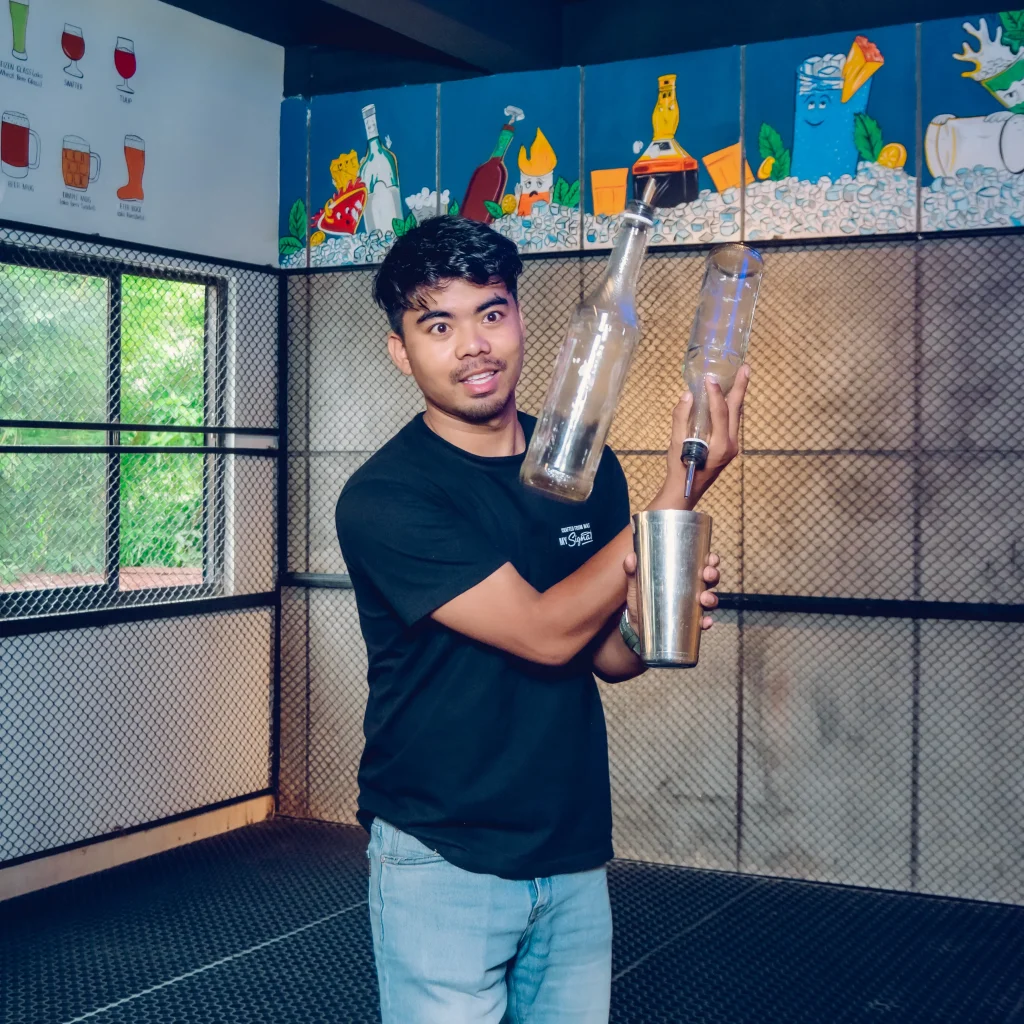
Flair bartending is the practice of entertaining guests through the artistic and acrobatic manipulation of bar tools and bottles during drink preparation. It transforms bartending from a functional task into a performance and it is a genuine professional skill with a competitive global circuit.
There are two types of flair in professional bartending:
- Working Flair: Practical, lower-risk bottle and tin moves incorporated into regular service. A single bottle spin before pouring, a tin flip during a shake, a dramatic pour. This is standard at any premium bar globally.
- Exhibition Flair: Full performance routines using multiple bottles, fire, and complex acrobatics. It is used in competition, events, and entertainment venues. Requires dedicated training and practice.
Cocktail and Flair Academy in Nepal: Training at Lavie Learning Academy
Lavie Learning Academy is Nepal’s leading cocktail and flair academy, offering the only comprehensive flair bartending programme in Kathmandu integrated with a full mixology curriculum.
Our Advanced Bartending Course covers:
- Foundation flair: Bottle spins, tin flips, pour control — working flair applicable from day one of employment
- Mixology foundation: Classic cocktail and mocktail preparation, recipe accuracy, flavor balance
- Glassware mastery: Every cocktail glass type, correct use, temperature management
- Bar operations: Speed, workflow, customer interaction, service standards
- Exhibition flair introduction: Multi-bottle routines, performance principles, competition format awareness
Why Flair Training Gives You a Career Advantage
Flair bartenders are in higher demand and command higher salaries than standard bartenders at equivalent experience levels. Here is why:
- Premium venue employment: Hotel bars, cocktail lounges, resort properties, and entertainment venues actively seek flair-trained bartenders for the customer experience they deliver.
- International differentiation: In Dubai, Maldives, and Southeast Asian resort markets, flair is a genuine differentiator. Resort bars specifically advertise for flair-trained candidates.
- Higher tips: Entertainment creates engagement, and engaged customers tip significantly better. This is well-documented across hospitality markets globally.
- Competition career: Nepal’s bartending competition scene is developing. Flair competition experience opens doors to international networks and opportunities.
Career Note: A bartender who can execute working flair, build classic cocktails accurately, and manage a busy bar service is the profile that premium employers in Nepal and internationally are hiring. Lavie Learning Academy’s 45-day programme develops all three simultaneously.
FAQ — Cocktail Glass and Flair Bartending
Q: Do I need expensive cocktail glasses to start bartending training?
No, Lavie Learning Academy provides all required glassware and bar equipment during training. Students learn on professional-grade equipment without needing to purchase anything for the course.
Q: Is flair bartending dangerous?
Working flair which is what most professional bartenders practice which carries minimal risk and is learned progressively. Exhibition flair with fire or complex multi-bottle routines requires dedicated practice time and proper supervision. Our programme introduces flair at a safe, structured pace.
Q: Which cocktail glass is most important to learn first?
The highball. It is the most versatile, most frequently used glass in any bar or cafe menu, and covers the widest range of both cocktail and mocktail serves. Mastering drink construction in a highball layering, pouring, garnishing transfers directly to every other glass type.
Q: Can I become a flair bartender without prior bartending experience?
Yes, starting from zero is often an advantage, because there are no bad habits to unlearn. Our programme teaches flair and mixology simultaneously from day one. Many of our strongest flair graduates had no prior bar experience when they enrolled.